
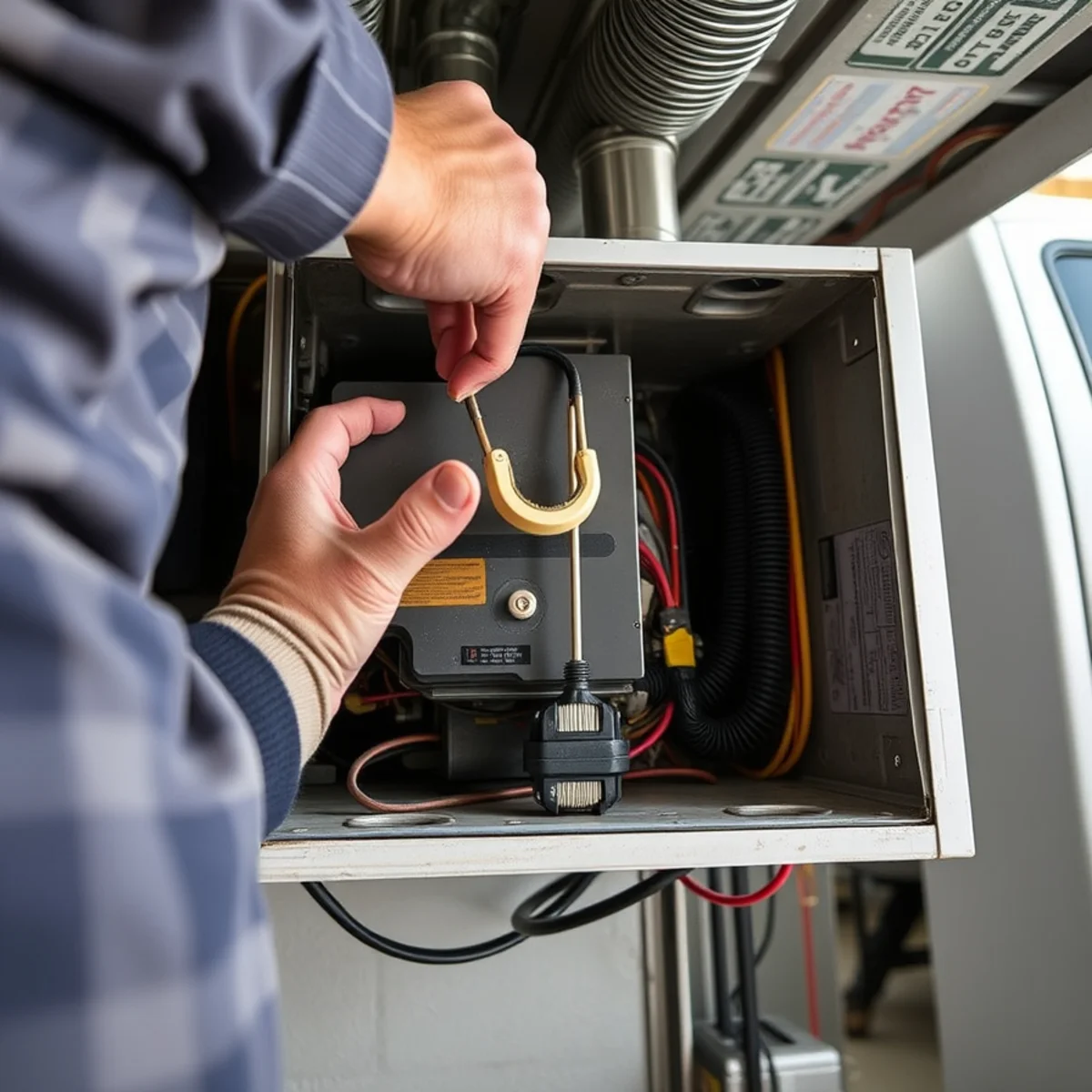
If you live in one of downtown Mechanicsburg’s twins or brick rowhomes, you know the pattern by heart. The living room is warm and comfortable. Climb the stairs, and the back bedroom is ten degrees colder and needs an extra blanket. In summer it flips — the upstairs bakes while the first floor stays cool. You have nudged the thermostat, closed a vent here and there, maybe bought a space heater. Nothing quite fixes it. The frustrating truth is that in these tall, narrow homes, uneven temperature is rarely a furnace problem. It is an airflow and duct-balancing problem.
These homes were often built before central forced air existed, then had ductwork threaded through them decades later, wherever it would fit. That history is exactly why the air does not distribute evenly — and why the fixes are about the duct system, not a bigger furnace.
Why twins and rowhomes fight you on temperature
A few forces stack up in a two- or three-story narrow home:
- The stack effect — warm air rises and leaks out the top of the house while cold air is drawn in low, so upstairs and downstairs behave like different climates.
- Retrofitted ductwork — long, twisty duct runs squeezed into old chases lose airflow to friction, so the farthest rooms get the least air.
- One thermostat, multiple zones — a single thermostat on the first floor shuts the system off when that floor is satisfied, leaving the far bedroom short.
- Undersized or leaky returns — if air cannot get back to the furnace, it cannot be pushed out to the far rooms, no matter how strong the furnace is.
- Shared walls and end units — a twin’s exposed gable end or a rowhome end unit loses more heat on one side than the middle units do.
The mechanism: it is about balance, not brute force
Here is the concept that changes how people think about this. A forced-air system is a loop. The blower can only push a fixed amount of air, and that air follows the path of least resistance — which means the close, easy rooms get more than their share and the far rooms get starved. “Duct balancing” is the process of deliberately restricting the easy paths so more air is forced down the hard paths to the far rooms. Turning up the furnace does not fix this; it just makes the warm rooms warmer while the cold room stays cold. The goal is to redistribute the air you already have, then make sure the system can move enough of it.
What you can safely try first
- 1Do a “rough balance” by hand: in winter, partially close the supply registers in the rooms that are always too warm (the close, first-floor rooms), which pushes more air upstairs. Reverse it in summer.
- 2Make sure return-air paths are open — keep doors to starved bedrooms cracked or undercut so air can circulate back, and never block a return grille with furniture.
- 3Replace a dirty filter. Restricted airflow hits the far rooms first, so a clogged filter exaggerates every imbalance.
- 4Set the thermostat fan to “On” for continuous circulation during the worst stretches — it keeps air mixing between floors even when the system is not actively heating or cooling.
- 5Check that no supply registers are painted shut or buried under rugs — common in older homes with layers of renovation.
Fully closing too many registers raises pressure in the duct system, which can cause the furnace to overheat and short-cycle or the AC coil to freeze. Partial adjustments to balance airflow are fine; sealing off half the house is not. If you find yourself closing vents everywhere to chase comfort, that is a sign the duct system needs a real balance, not more band-aids.
The fixes that actually work
When hand-balancing is not enough, the durable solutions are duct-system fixes. Depending on your home, that can include:
- Professional duct balancing with adjustable dampers set to measured airflow, so each floor gets its designed share.
- Sealing leaky ducts in the basement and chases — leaks in unconditioned space dump heated or cooled air where you do not live, starving the rooms that need it.
- Adding or enlarging returns upstairs so air can actually get back to the system from the far rooms.
- Correcting undersized or crushed duct runs that choke airflow to the farthest bedrooms.
These are the core of professional ductwork repair and installation: measuring airflow room by room, then adjusting the system so the air goes where you need it. It is methodical work, but it is what permanently evens out a house that band-aids never quite fixed.
When ducts cannot get there: a ductless zone
Sometimes the far bedroom, the finished attic, or a rear addition simply has no good way to route proper ductwork — a common reality in these tight downtown floor plans. In those cases the most effective fix is a ductless mini-split: a small indoor head serving just that space, with its own thermostat and no ductwork to balance. It gives the problem room independent heating and cooling instead of forever fighting the main system. We install these throughout downtown Mechanicsburg for exactly this stubborn-room situation.
If you have been stacking blankets in one room and sweating in another for years, it is a solvable problem — and it usually is not the furnace. Call HVAC Mechanicsburg PA at +1 (327) 210-5999 and we will measure the airflow, find where the balance breaks down, and tell you honestly whether it is a damper adjustment, a duct-sealing job, or a ductless zone.