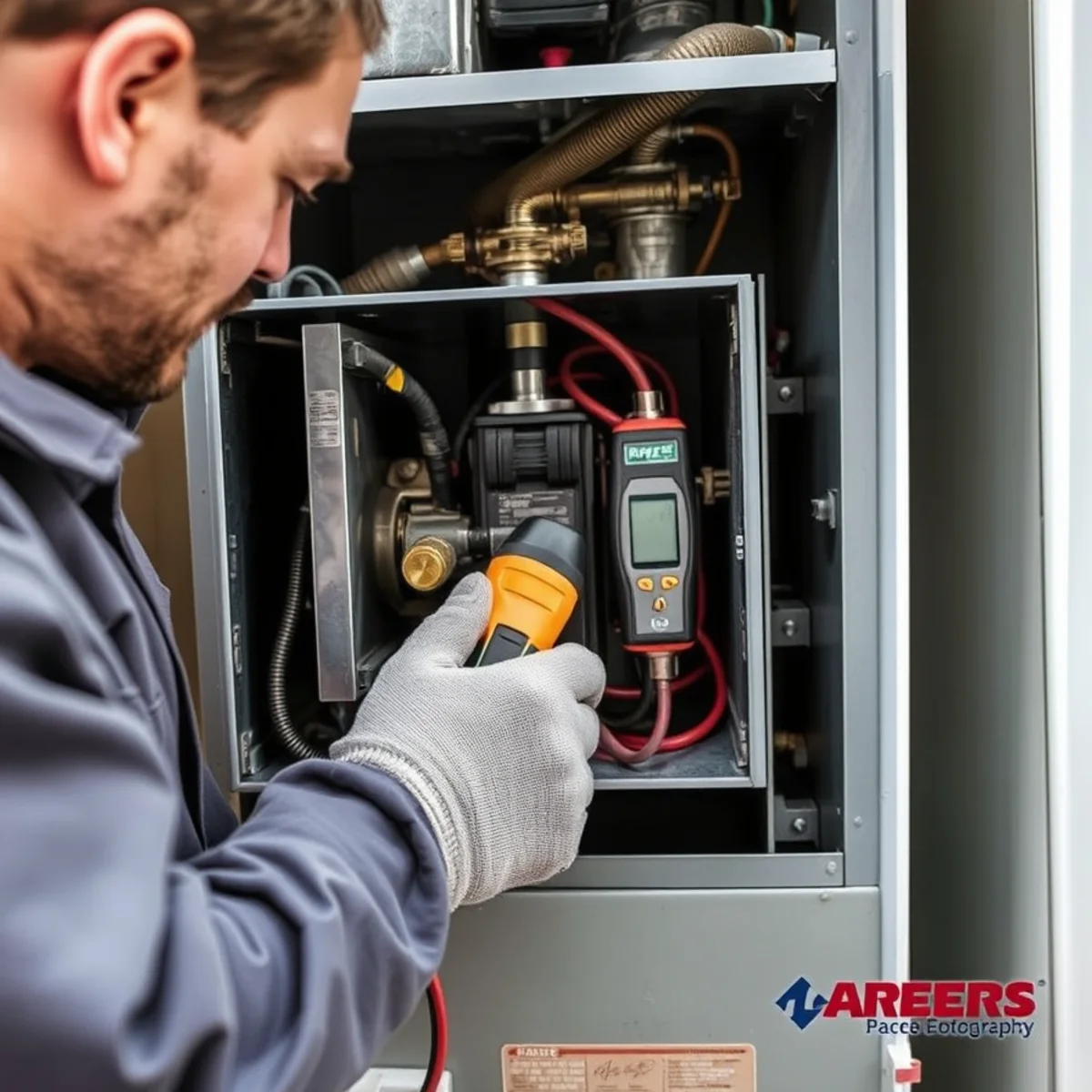
It is a cold January morning in Upper Allen Township. You glance out the back window and your heat pump looks alarming: steam is rising off the top of it, the outdoor fan has stopped spinning, and a minute ago the air coming from the registers turned noticeably cool. First-year heat pump owners call us about this constantly, convinced the unit is broken. In almost every case, it is doing exactly what it was designed to do. It is running a defrost cycle — and understanding it will save you a service call and a lot of worry.
Heat pumps are still relatively new to a lot of Cumberland County homes, so the winter behavior catches people off guard. Let us walk through the mechanism so you know what is normal and what is not.
How a heat pump makes heat in the cold
Unlike a furnace that burns fuel, a heat pump moves heat. Even in cold air there is heat energy, and the outdoor coil absorbs it, then the system concentrates that heat and delivers it indoors. The catch: when the outdoor coil gets colder than the surrounding air and the air is humid, moisture condenses on the coil and freezes into frost. A frosted coil cannot absorb heat well, so the system has to periodically melt it off. That is the defrost cycle.
What actually happens during defrost
To melt the frost, the heat pump briefly reverses itself — it runs in cooling mode for a few minutes so the outdoor coil gets warm and sheds its ice. Here is what you will notice, and all of it is normal:
- Steam or vapor rising off the outdoor unit — that is frost melting and evaporating, not smoke. It can look dramatic on a cold morning.
- The outdoor fan stops while the coil warms up, even though the unit is clearly running.
- A whoosh or clunk as the reversing valve switches — a distinct sound that is entirely normal.
- Cooler air from the indoor vents for a few minutes, because the system is temporarily in cooling mode. In most installs, the backup heat kicks on to offset this so you do not feel a cold draft.
- A puddle or patch of ice under the unit as the melt water drains — normal, though it should not build into a large ice dam.
A defrost cycle typically lasts a few minutes and then the system returns to normal heating. Depending on temperature and humidity, a heat pump might defrost anywhere from once an hour to once every several hours during cold, damp weather. This is by design and is part of why we plan a sensible backup-heat strategy with every heat pump installation and repair.
The most common “my heat pump is broken” call in winter is really just the defrost cycle: the unit reversed to cooling for a few minutes to melt frost, and the vents blew cool air briefly. If it lasts only a few minutes and warm heat returns on its own, that is normal. It is worth calling only when defrost runs constantly, never finishes, or the coil stays encased in ice.
What is NOT normal — when to call
Defrost is healthy. A defrost system that is malfunctioning is not, and there are a few clear signs the cycle has gone wrong:
- The outdoor coil is fully encased in solid ice and never clears, even after cycles — a sign the defrost control, sensor, or reversing valve is not working.
- The unit is stuck in defrost, running cool air indoors for far longer than a few minutes or cycling into defrost every few minutes non-stop.
- Ice building on top of the unit or into a large dome, rather than clearing on the coil, which can point to a drainage or refrigerant issue.
- The heat pump is short-cycling — starting and stopping rapidly — which is a different problem from defrost and needs diagnosis.
- The backup heat never engages during defrost, so you get long, genuinely cold drafts indoors.
What you can safely check
- 1Time it. If the cool-air period lasts only a few minutes and warm heat returns on its own, it was almost certainly a normal defrost — no action needed.
- 2Keep the outdoor unit clear: brush snow off the top and sides, and shovel a few inches of clearance around it so it can breathe. Never chip at ice on the coil with a tool.
- 3Make sure nothing is piled against the unit and that roof runoff or a gutter is not dripping directly onto it and re-freezing.
- 4Check that your emergency/auxiliary heat is set correctly at the thermostat — you generally do not want to run “Emergency Heat” full time unless the heat pump has actually failed.
If the coil is iced over, do not attack it with a hammer, screwdriver, or ice pick — the coil fins and refrigerant tubing are thin and easily punctured, and a punctured coil turns a defrost-control repair into a refrigerant leak. Shut the system to “Emergency Heat” if you have it, and call for service. Warm (not boiling) water can help in a pinch, but a persistent ice problem needs a technician.
The bottom line for Cumberland County homeowners
On the Zone 6b/7a line, a properly installed cold-climate heat pump will defrost regularly through the winter, and most of what looks alarming — steam, a stopped fan, a few minutes of cool air, a whoosh from the reversing valve — is exactly what it should do. Serving Upper Allen Township and the surrounding West Shore, we would rather explain a normal cycle over the phone than charge you for a “repair” you did not need.
But if your coil stays locked in ice, the unit is stuck in defrost, or the backup heat never picks up the slack, that is a real fault. Call HVAC Mechanicsburg PA at +1 (327) 210-5999 and we will check the defrost control, sensors, reversing valve, and refrigerant charge.