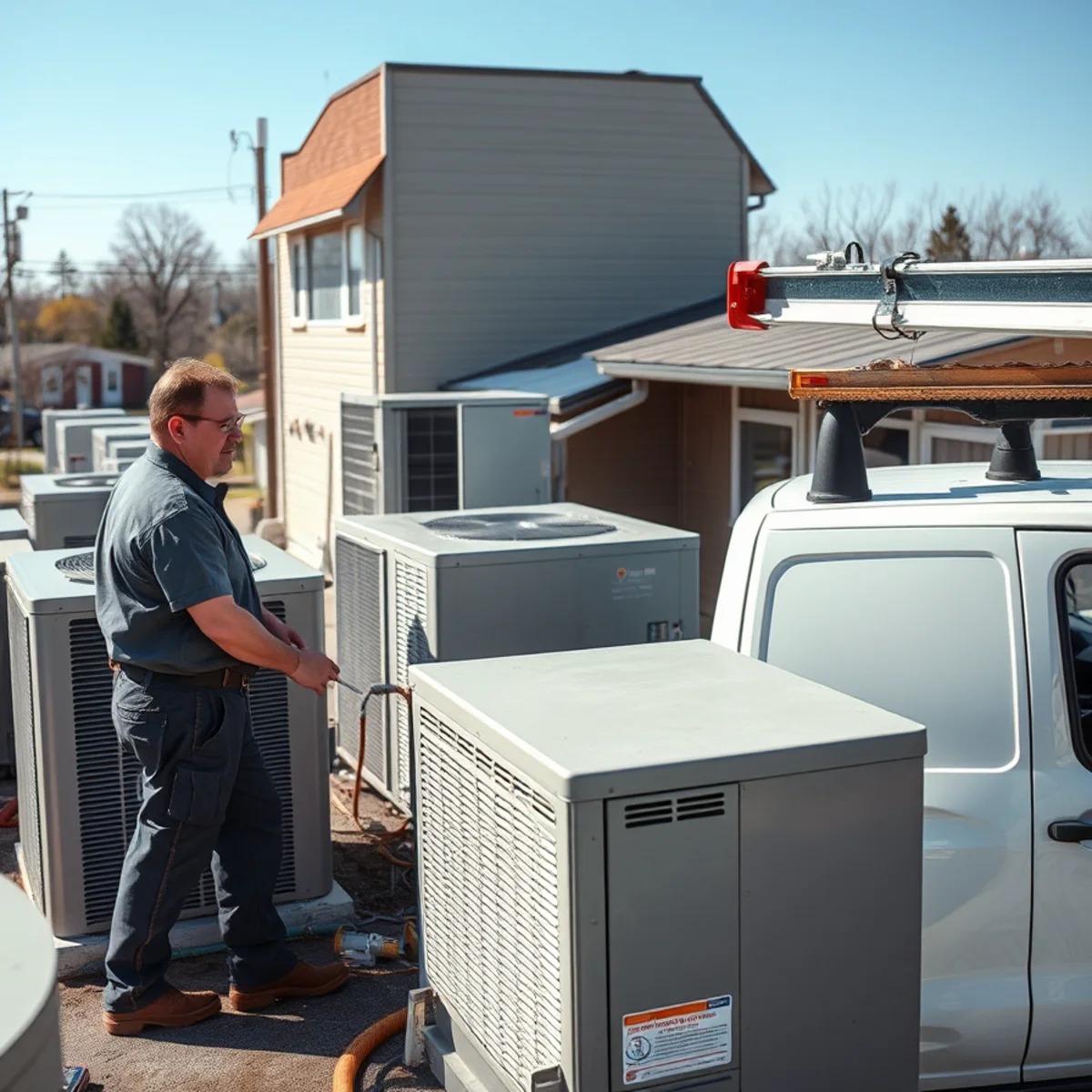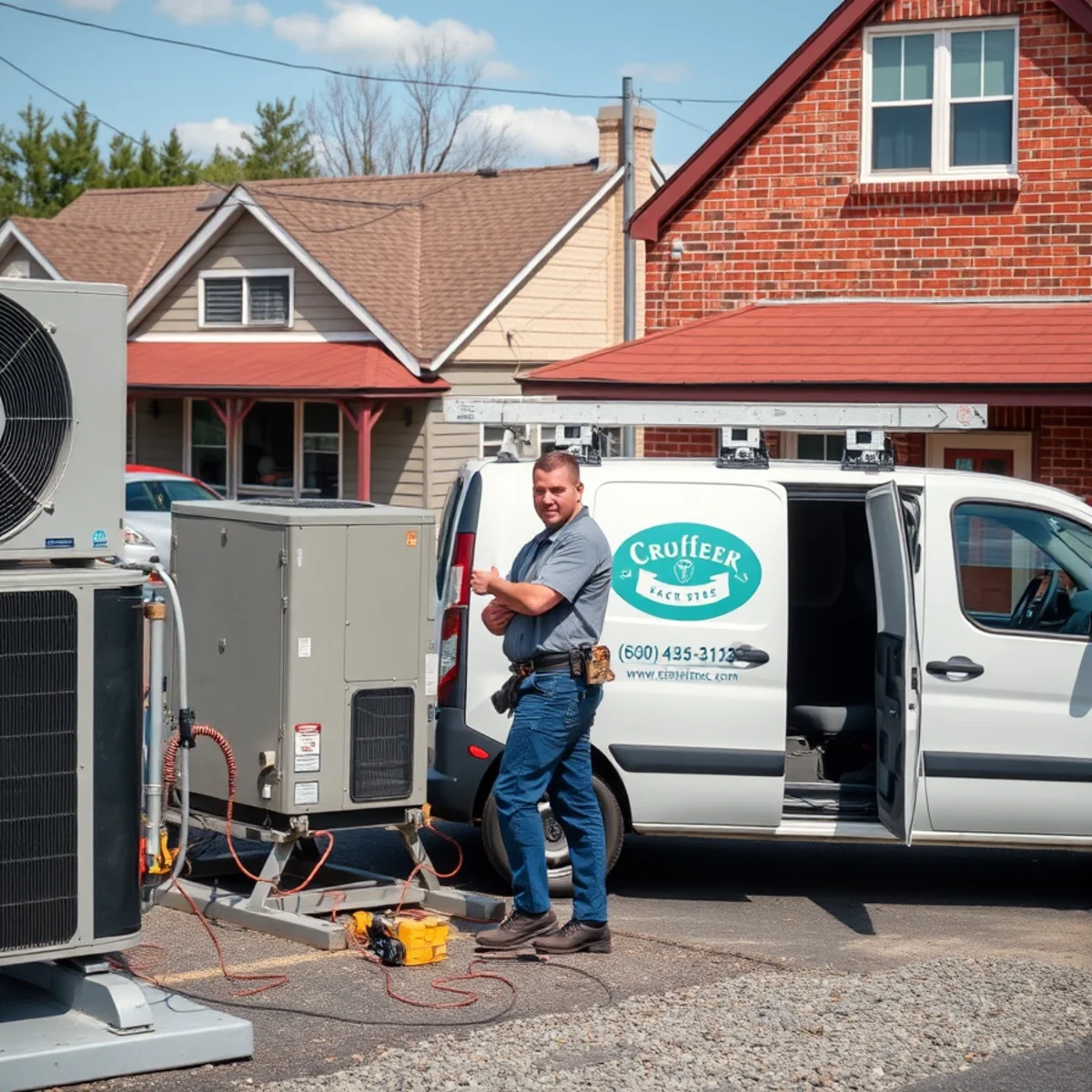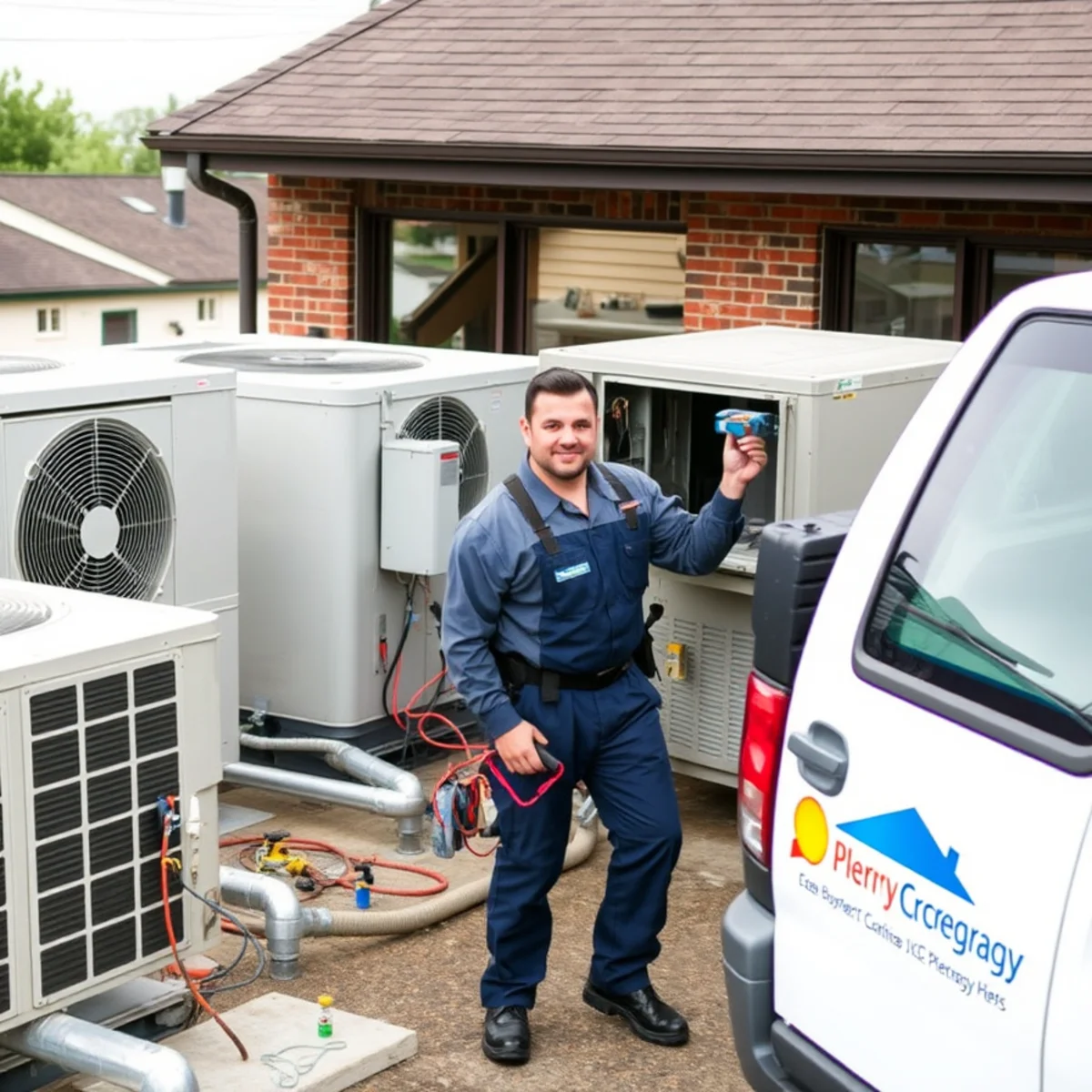
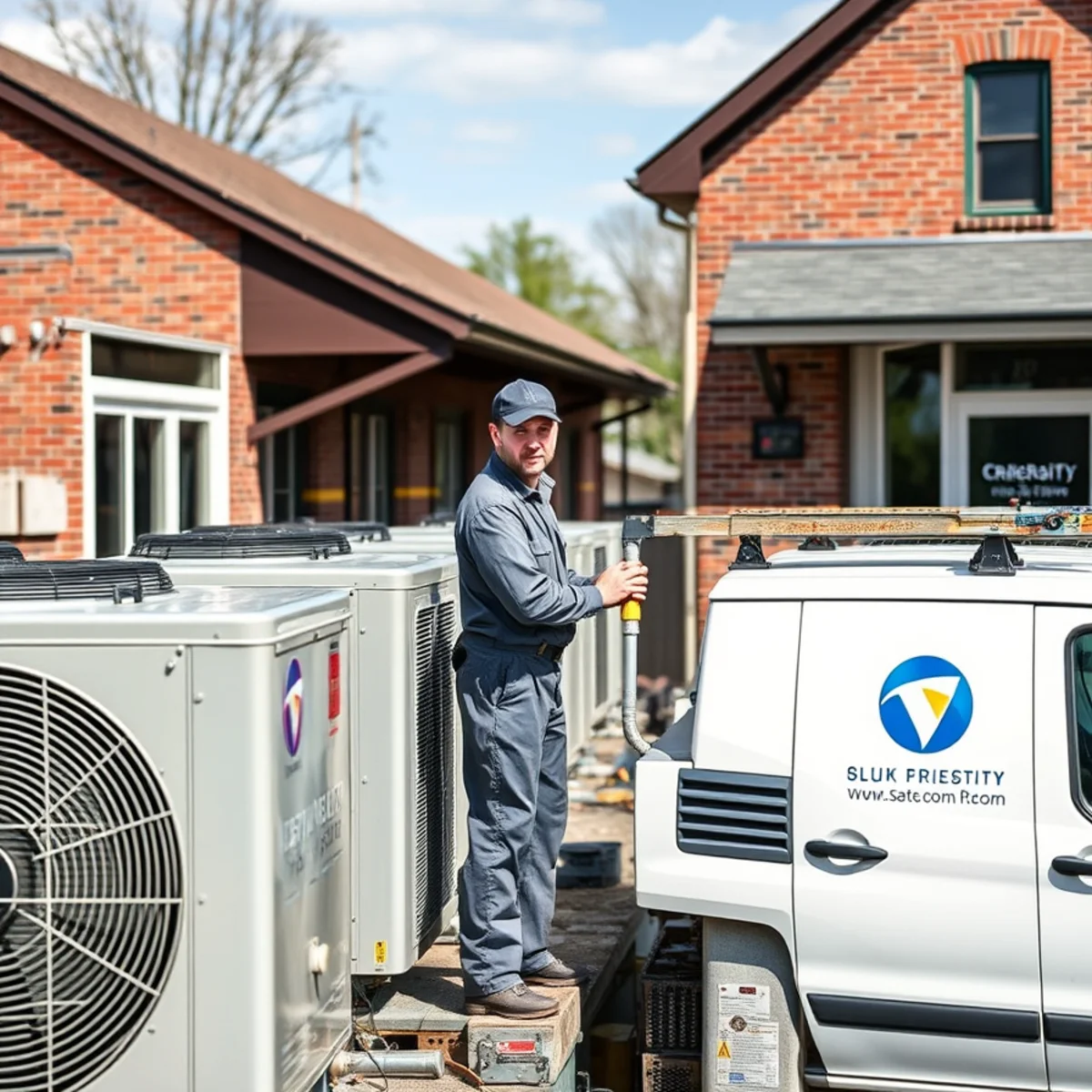
When a rooftop unit quits on a Cumberland County business, the pressure is to fix it fast and move on. But the smarter question is whether this repair is money well spent or money thrown at a unit that is going to fail again next season. A packaged rooftop unit, or RTU, is a big capital item, and the repair-or-replace call deserves a framework rather than a gut reaction. Our commercial HVAC team walks owners through it the same way every time.
Why rooftop units wear differently
An RTU lives its entire life fully exposed. It bakes through humid July afternoons, freezes and thaws all winter, and sheds rain and snow with only its own cabinet for shelter. Everything, the compressor, coils, belts, economizer, and controls, is packaged into one weatherized box on the roof. That exposure means RTUs age faster than a sheltered split system, and it is why a unit that looked fine last fall can start stacking failures the following summer.
That same exposure is why maintenance history weighs so heavily in this decision. A unit that has been serviced every season, with clean coils and fresh belts, will often justify a repair well into its teens. One that has been ignored may be functionally older than its years, carrying corrosion and worn components that make the next failure a question of when, not if. Two identical units of the same age can land on opposite sides of the repair-or-replace line purely on how they were maintained.
The five factors that decide it
No single number answers the question. We weigh five factors together:
- 1Age. Commercial rooftop units commonly run 15 to 20 years. A repair on a 6-year-old unit is easy to justify; the same repair on an 18-year-old unit rarely is.
- 2Refrigerant. Units built for phased-out R-22 face rising recharge costs and dwindling supply. A significant refrigerant repair on an R-22 unit often tips the scale toward replacement.
- 3The cost of the failed component. A contactor or capacitor is a cheap fix on any unit. A failed compressor or heat exchanger can approach the cost of a new unit, which changes the math entirely.
- 4Efficiency and operating cost. An older, dirty, or undersized unit runs longer and costs more every month. A modern replacement can cut that operating cost enough to matter over the unit's life.
- 5Downtime and reliability. If the unit has already failed two or three times, each future failure means another day of lost business. Reliability has real dollar value for a storefront or office.
A common industry guide is to replace when the repair cost times the unit's age exceeds the price of a new unit. It is a starting point, not gospel. We use it alongside refrigerant type, efficiency, and your tolerance for another mid-shift failure, then give you the actual numbers rather than a slogan.
When repair is clearly the right call
Plenty of RTU failures are worth repairing. A newer unit with an isolated electrical fault, a failed fan motor, a bad economizer actuator, or a clogged condensate drain should be repaired, not replaced. Consistent maintenance keeps most units in this category by catching wear before it cascades into a major failure. If your unit is well maintained and under about a dozen years old, the default answer is fix it.
When replacement wins
Replacement moves ahead when age, refrigerant, and a costly failed component line up: an 18-year-old R-22 unit with a dead compressor is not worth a $2,800-plus repair. The good news is that a planned changeout is far less disruptive than an emergency one. We size the replacement to the actual load, coordinate the crane or lift, and schedule the swap to minimize downtime rather than scrambling during a heat wave.
There is also an efficiency dividend a repair never delivers. A modern replacement meeting current standards can meaningfully cut the energy a storefront or office spends on cooling, and for a unit that runs long hours through a Cumberland County summer, that saving compounds month after month. It rarely justifies replacing a healthy unit on its own, but it is a real thumb on the scale once the other factors already point toward a changeout.
Planning a replacement that minimizes downtime
The fear that keeps a business limping along on a dying unit is downtime, but a planned changeout is far less disruptive than the emergency it prevents. When replacement is the answer, the work is mostly logistics you can schedule around your hours.
- 1Confirm the load with a proper calculation so the new unit is right-sized, not just matched to the old nameplate
- 2Check the roof curb and whether an adapter is needed to seat the new unit cleanly
- 3Schedule the crane or lift, the electrical, and the controls work in one coordinated window
- 4Time the swap for an off day or a slow stretch to keep the sales impact low
- 5Commission the new unit and verify airflow, refrigerant charge, and controls before we leave
Serving businesses in Camp Hill and across the county
We service and replace rooftop units for retail, office, and light-industrial buildings throughout Cumberland County, including the commercial strips of Camp Hill and the corridors along I-81 and I-83. The best time to make this decision is before the unit dies, which is exactly what our commercial maintenance program is designed to give you: advance warning and time to plan.