
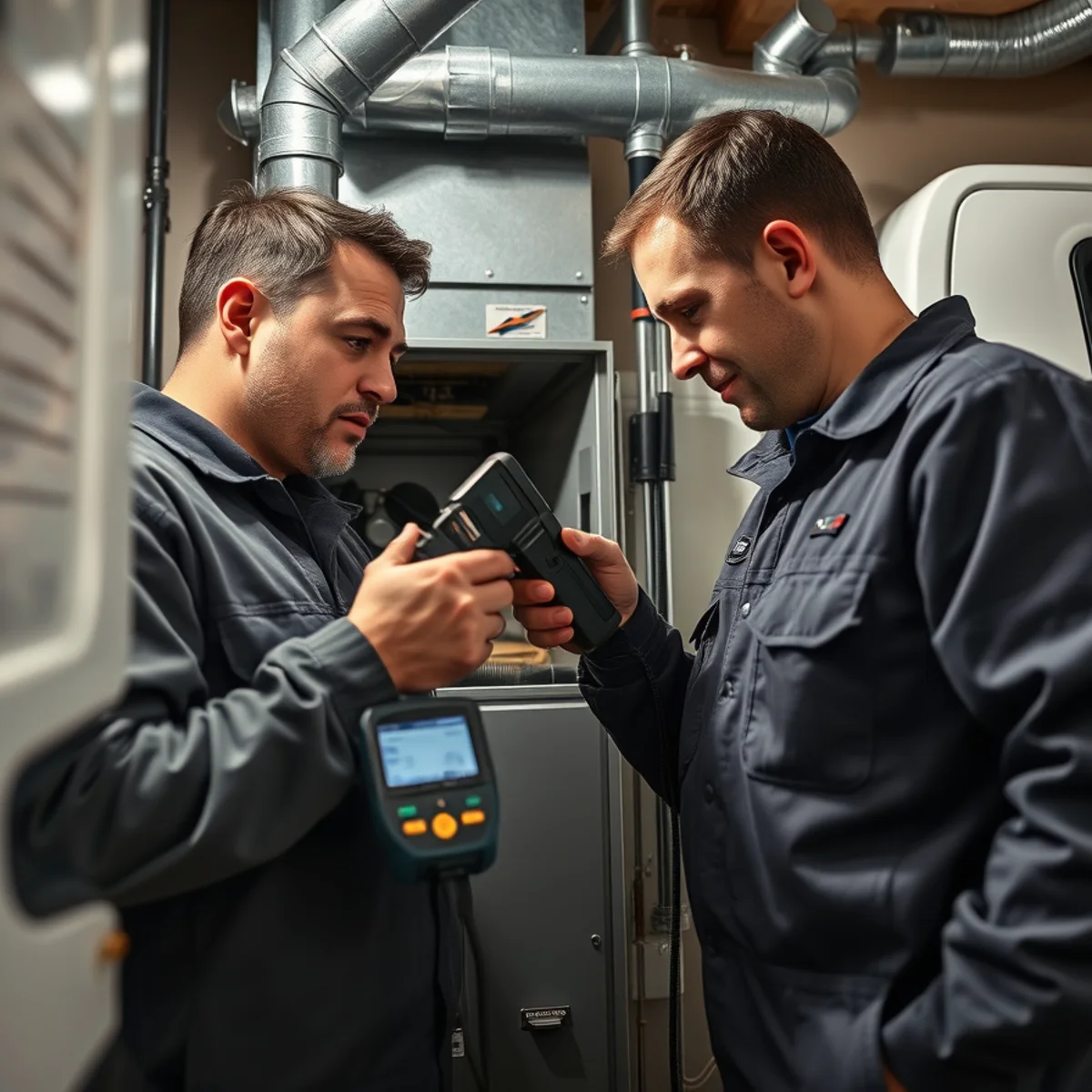
Carbon monoxide is colorless and odorless, and a cracked heat exchanger or blocked flue can release it into your home. If your detector alarms or you suspect a combustion problem, take it seriously — and let us test the system properly.
If your carbon monoxide detector is alarming or anyone has symptoms (headache, dizziness, nausea, confusion), get everyone outside to fresh air and call 911 immediately. Do not re-enter until responders say it is safe. Call us afterward to find and fix the source.
Where carbon monoxide comes from
In a home, CO typically comes from incomplete combustion in a gas, propane, or oil furnace, boiler, or water heater — often due to a cracked heat exchanger, a blocked or disconnected flue, poor combustion air, or a badly maintained burner. Older combustion equipment in the borough’s historic homes deserves particular attention.
What our safety inspection covers
- Combustion analysis and CO measurement at the appliance
- Heat exchanger inspection for cracks and corrosion
- Flue and venting check for blockage, disconnection, or backdrafting
- Gas line and connection leak check
- Combustion-air and draft verification
- A clear written report of what is safe and what needs attention
Warning signs worth a call
- Frequent headaches or flu-like symptoms that ease when you leave home
- A yellow or flickering burner flame instead of steady blue
- Soot or scorching around the furnace or water heater
- Excess condensation on windows near combustion appliances
- A CO detector that has alarmed, even briefly
Learn the full list in Carbon Monoxide Warning Signs Every Mechanicsburg Household Should Know. Pair a professional inspection with working CO detectors on every level of your home.
What a safety inspection costs and covers
A combustion and CO safety inspection is affordable peace of mind, quoted up front, and best scheduled annually as part of a fall heating tune-up. It covers combustion analysis and CO measurement at the appliance, a heat-exchanger inspection for cracks and corrosion, a flue and venting check for blockage or backdrafting, a gas-line leak check, and a clear written report of what is safe and what needs attention — the kind of documentation that protects your family and your records.
Why choose HVAC Mechanicsburg PA for CO and gas safety
Carbon monoxide is colorless and odorless, so this is not work to trust to guesswork. Our EPA 608-certified technicians use a calibrated combustion analyzer and follow a documented process rather than eyeballing a flame, and we give you honest findings — including when a cracked heat exchanger means the safe answer is replacing a component or the furnace. That rigor, backed by our licensed, insured PA HIC status and 4.9-star record, is exactly what a safety inspection should be.
- Calibrated combustion analysis and CO measurement, not a visual guess
- Heat-exchanger, flue, venting, and gas-line checks in one visit
- Plain written findings — what is safe and what needs attention
- Honest guidance when a safety condition calls for repair or replacement
Warning signs worth a call
Because carbon monoxide is colorless and odorless, you have to know the indirect signs. Frequent headaches or flu-like symptoms that ease when you leave the house and return when you come home are a classic red flag. A yellow or flickering burner flame, instead of a steady blue, points to incomplete combustion. Soot or scorching around the furnace or water heater, and excess condensation on windows near combustion appliances, are worth a professional look. And any CO detector that has alarmed — even briefly, even if it reset — deserves a combustion inspection rather than a shrug.
In a home, CO typically comes from a cracked heat exchanger, a blocked or disconnected flue, poor combustion air, or a badly maintained burner on a gas, propane, or oil appliance. Older combustion equipment in the borough’s historic homes is especially worth checking. Pair a professional inspection with working CO detectors on every level, and replace the detectors on the schedule printed on the unit — most are only good for five to seven years.
What we do if we find a problem
If our testing turns up a cracked heat exchanger, a blocked flue, or dangerous combustion readings, we do not sugarcoat it — but we also do not use it as a scare tactic to sell a system. We show you the evidence, explain exactly what the finding means for your safety, and lay out the honest options: a component replacement where that is appropriate, or a furnace replacement where the heat exchanger is compromised. A cracked heat exchanger generally cannot be safely repaired, and we will tell you so plainly. If we find an active gas leak, we guide you to shut off and involve your utility immediately. The goal is a safe home and a clear-eyed decision, backed by documentation you can keep.
The best time to schedule a combustion and CO safety check is early fall, bundled with your heating tune-up, before the furnace runs hard all winter. Do not wait for a detector to alarm — an annual inspection catches a developing problem while it is still cheap and safe to fix, and it gives you documented peace of mind that the equipment keeping your family warm is also keeping them safe.
Safety inspections across the Mechanicsburg area
Older combustion equipment in the borough’s historic homes deserves particular attention, and we perform CO and gas safety checks throughout Downtown Mechanicsburg, the surrounding townships, and greater Cumberland County. Pair a professional inspection with working CO detectors on every level of your home.