
Cumberland County’s winters are defined by the freeze-thaw cycle — days that climb above freezing followed by nights that plunge back below it, over and over across January and February. That constant swing is hard on everything from roads to foundations, and it is especially hard on the water lines running through the unheated corners of your home. In lower-lying areas near the Yellow Breeches Creek in Monroe Township, where crawlspace construction is common, frozen pipes are a predictable seasonal threat rather than a freak event. This guide covers all three phases: preventing a freeze, thawing a line safely if one does freeze, and responding fast when a pipe bursts.
Why pipes freeze here specifically
Water expands as it freezes, and that expansion generates enormous pressure inside a closed pipe — enough to split copper or crack PEX. The pipes most at risk are the ones with the least protection from your home’s heat: lines in crawlspaces, unheated basements, garages, attics, and inside exterior walls. In our climate, sustained temperatures around 20°F and below are the danger zone, and wind chill along exposed foundation walls makes it worse. A pipe does not have to be outdoors to freeze — it just has to be somewhere your heat does not reach.
Prevention: the pre-freeze checklist
The best frozen-pipe response is the one you never need. Before the first hard freeze, and again before any forecast cold snap, work through this list:
- Insulate exposed pipes. Foam pipe sleeves on lines in crawlspaces, garages, and unheated basements are inexpensive and dramatically cut the risk.
- Seal the cold air out. Close crawlspace vents in winter, weatherstrip garage doors, and seal gaps where cold air pours in near pipe runs.
- Keep the heat on. Never let the thermostat drop below 55°F, even when you are away — a few dollars of heat is far cheaper than a flooded floor.
- Open interior doors. Let warm air circulate to pipes on exterior walls by opening cabinet doors under sinks, especially kitchens and bathrooms on outside walls.
- Let it drip. In extreme cold, a thin trickle from the faucet farthest from your water main keeps water moving, and moving water resists freezing.
- Disconnect garden hoses and shut off and drain outdoor spigots before winter.
The most vulnerable pipe in most homes is the one farthest from where water enters the house, on an exterior wall, in an unheated space. If you only protect one line, protect that one — and run its faucet as your trickle point during a deep freeze.
How to safely thaw a frozen pipe
You will know a pipe has frozen when a faucet slows to a trickle or stops entirely while others still flow, usually after a very cold night. If you can reach the frozen section and it has not yet burst, you can often thaw it yourself — carefully.
- 1Open the affected faucet so that melting water can escape and steam has somewhere to go as the ice releases.
- 2Apply gentle heat to the frozen section — a hair dryer, a heat lamp, or towels soaked in hot water. Start near the faucet and work back toward the frozen area.
- 3Keep working until full pressure returns, then check the pipe and its neighbors for cracks or weeping seams.
- 4If you cannot locate the freeze, cannot reach it, or the pipe is inside a finished wall, stop and call a plumber — do not open the wall blindly.
Never thaw a pipe with an open flame — no torches, no propane heaters aimed at a pipe. It is a serious fire risk, it can crack the pipe from thermal shock, and in older homes it can ignite framing or insulation inside a wall cavity. Use only gentle, flameless heat, and if that feels beyond you, call a professional.
When a pipe has already burst
If a frozen line has split, minutes matter. Act in this order:
- 1Shut off your home’s main water valve immediately — know where it is before you ever need it.
- 2Open faucets to relieve pressure and drain the remaining water in the lines.
- 3Move belongings out of the water’s path and start removing standing water to limit damage.
- 4Call a plumber for the pipe repair, and if the outage that caused it is a heating failure, call us to restore heat so the rest of your plumbing does not follow.
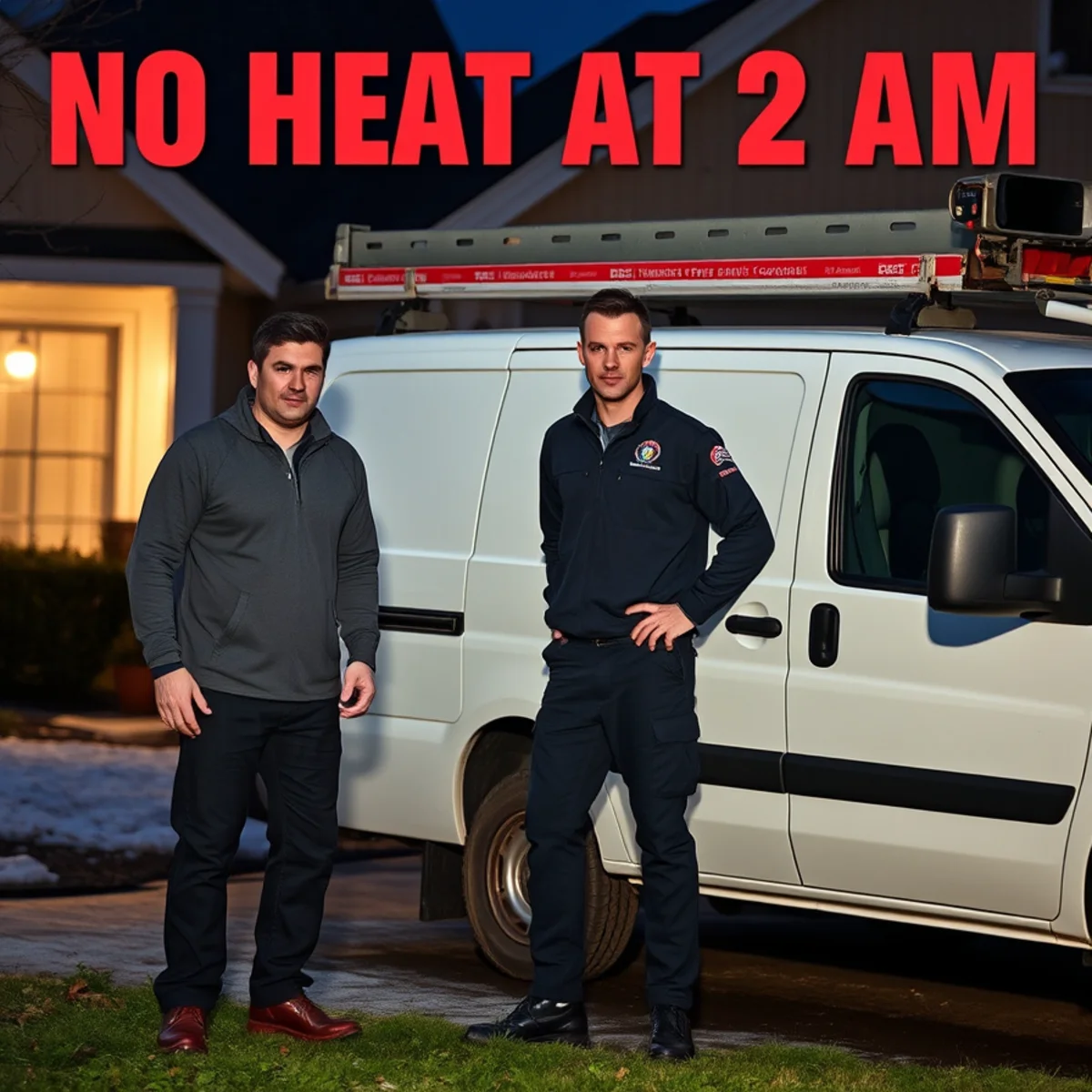
The connection between heat and pipes is why a heating failure in deep cold is a two-part emergency. Our frozen pipe and heat outage response focuses on the root cause — getting your heating system running again — because restored heat is the single best protection for the pipes you have not lost yet. For a dead furnace behind it all, our emergency furnace repair crew answers around the clock at +1 (327) 210-5999.
The heat outage behind most frozen-pipe calls
A well-heated home rarely freezes its pipes. The trouble almost always starts when the heat goes out during a cold stretch — a furnace lockout, a tripped breaker no one noticed, a system that quietly failed while the family was away for the holidays. That is why keeping your heating system reliable is genuinely part of your plumbing strategy. A fall heating tune-up catches the marginal parts that cause mid-winter outages, and our companion guide on winterizing your home before the first hard freeze ties the whole seasonal checklist together.